Salesforce Workcenter + Rep Enablement System
A custom CRM workcenter that gives reps one place to manage leads, daily schedules, action history, personal stats, training insights, leaderboard context, AI call reviews, and smart meeting coverage.
I build the analytics, automations, scoring models, dashboards, and operating rhythms that help teams understand customers, improve lead flow, and make sharper product and revenue decisions.
These deep dives focus on the operating layer behind the metrics: Salesforce tooling, predictive models, routing logic, manager visibility, marketing quality analysis, and behavioral feedback loops.
A custom CRM workcenter that gives reps one place to manage leads, daily schedules, action history, personal stats, training insights, leaderboard context, AI call reviews, and smart meeting coverage.
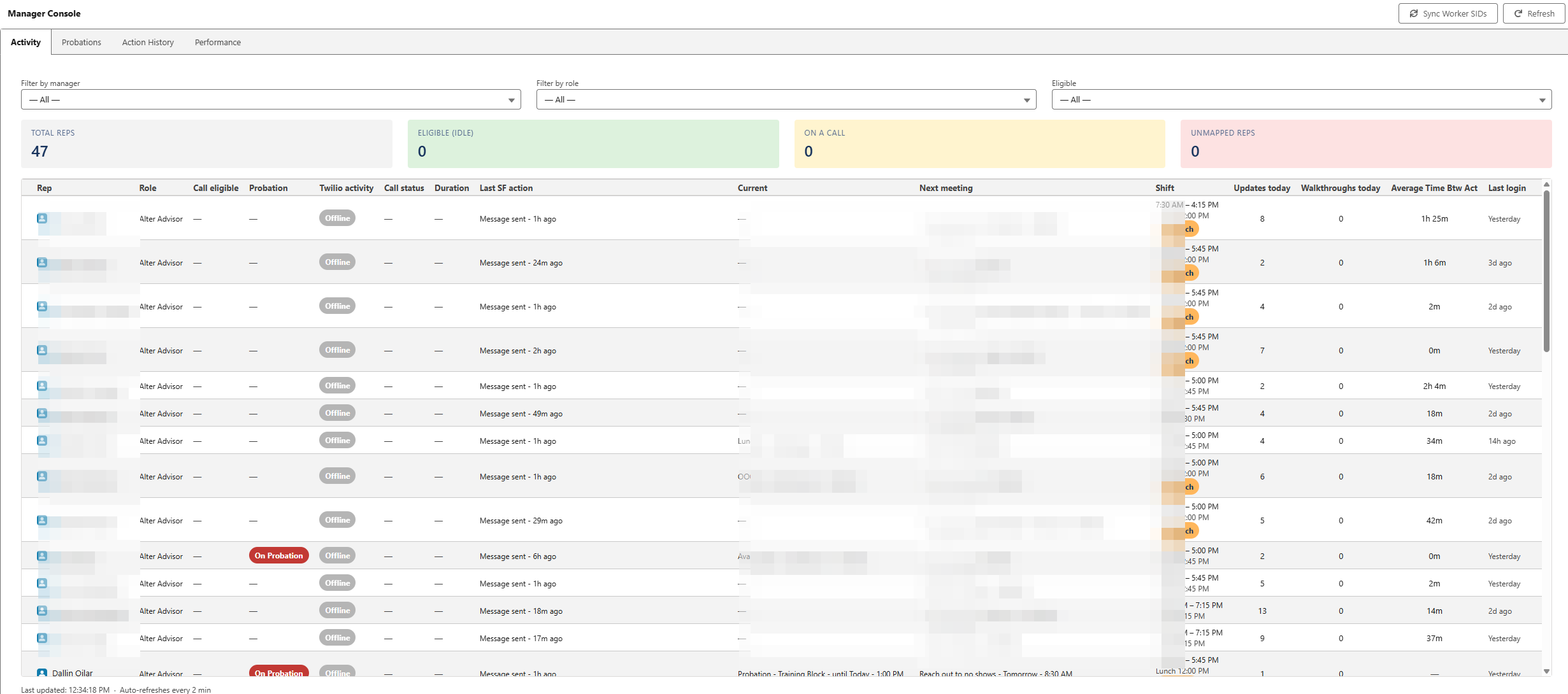
A live floor-activity console for managers and remote stakeholders, combining activity monitoring, probation controls, historical action review, and KPI leaderboards into a consolidated management layer.
A marketing analytics layer connecting campaign performance, UTM/event testing, lead quality, predictive close likelihood, pricing analysis, ad spend pacing, and revenue-impact decisions.
A bridge between marketing analytics and revenue operations: close-likelihood prediction, capacity-aware lead release, booking-rate assumptions, and routing logic that controlled flow into the sales team.
My research background gives my operations work a stronger measurement standard. I have worked across biometric data, wearable devices, loneliness, social connection and diverse scales, language toxicity, network ties, and behavioral analysis, often linking combinations of these to find and explore new outcomes.
Outlook/Salesforce, Intercom/Salesforce, Intercom/Shopify, and Twilio/Salesforce integrations for cleaner employee and customer workflows.
Smart review collection workflows that improve reputation signals and automate post-customer touchpoints.
Analyses across text cadence, lifecycle email efficiency, contractor cost/benefit, survey writeups, and shareholder KPI reporting.
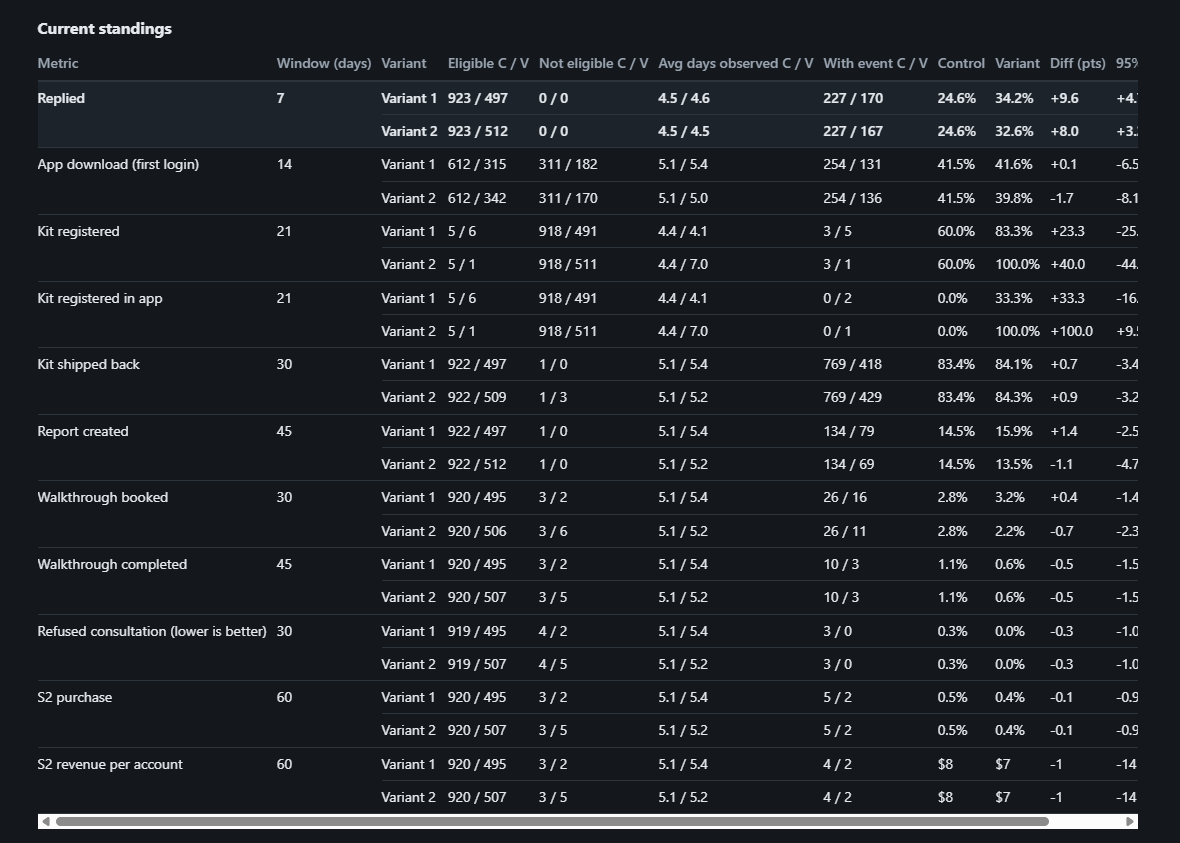
Statistical product split, pricing, and placement analyses to identify stronger conversion, lead quality, and CPA tradeoffs.
Psychology-informed peer benchmarking, social proof, and accountability loops to improve rep performance and team standards.
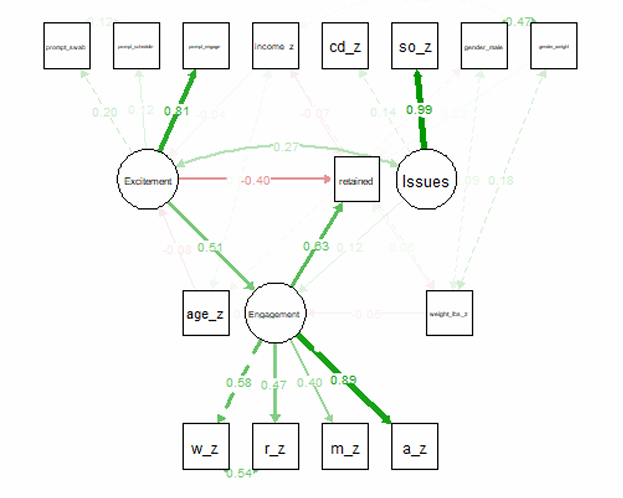
Structural equation modeling and customer behavior analysis that connect latent engagement signals to product and retention decisions.
My background in behavioral science shapes how I build systems: define the behavior, instrument the process, measure the outcome, and improve the loop.
Lead scoring, intelligent routing, rep efficiency monitoring, probation systems, CRM administration, lifecycle design, and KPI operating rhythms.
Predictive modeling, regression, multivariate analysis, attribution, factor analysis, and structural equation modeling.
BigQuery, Snowflake, SQL, Sigma, Salesforce, Google Analytics, data joins, dashboards, and scalable reporting systems.
Survey design, longitudinal analysis, customer feedback, user research, publications, and evidence-based recommendations.
Currently leading product, marketing, and revenue analytics work at AlterMe while completing a Master of Statistics at the University of Utah.
Own product and marketing analytics, revenue operations systems, lead scoring, intelligent routing, KPI systems, attribution modeling, and lifecycle automation.
Collected longitudinal client data and supported behavioral progress through applied behavioral analysis work.
Analyzed social psychology data, supported published research, taught inferential statistics, and helped students present research.
Product analytics, marketing analytics, Revenue Operations, lead scoring, intelligent routing, attribution, customer lifecycle automation, and KPI systems.
Ongoing graduate work in regression, structural equation modeling, inference, and advanced statistical analysis.
Experience in social psychology, longitudinal research, survey design, behavioral analysis, and statistical communication.
I am interested in data science, Revenue Operations, product analytics, marketing analytics, and roles where customer behavior meets business outcomes.
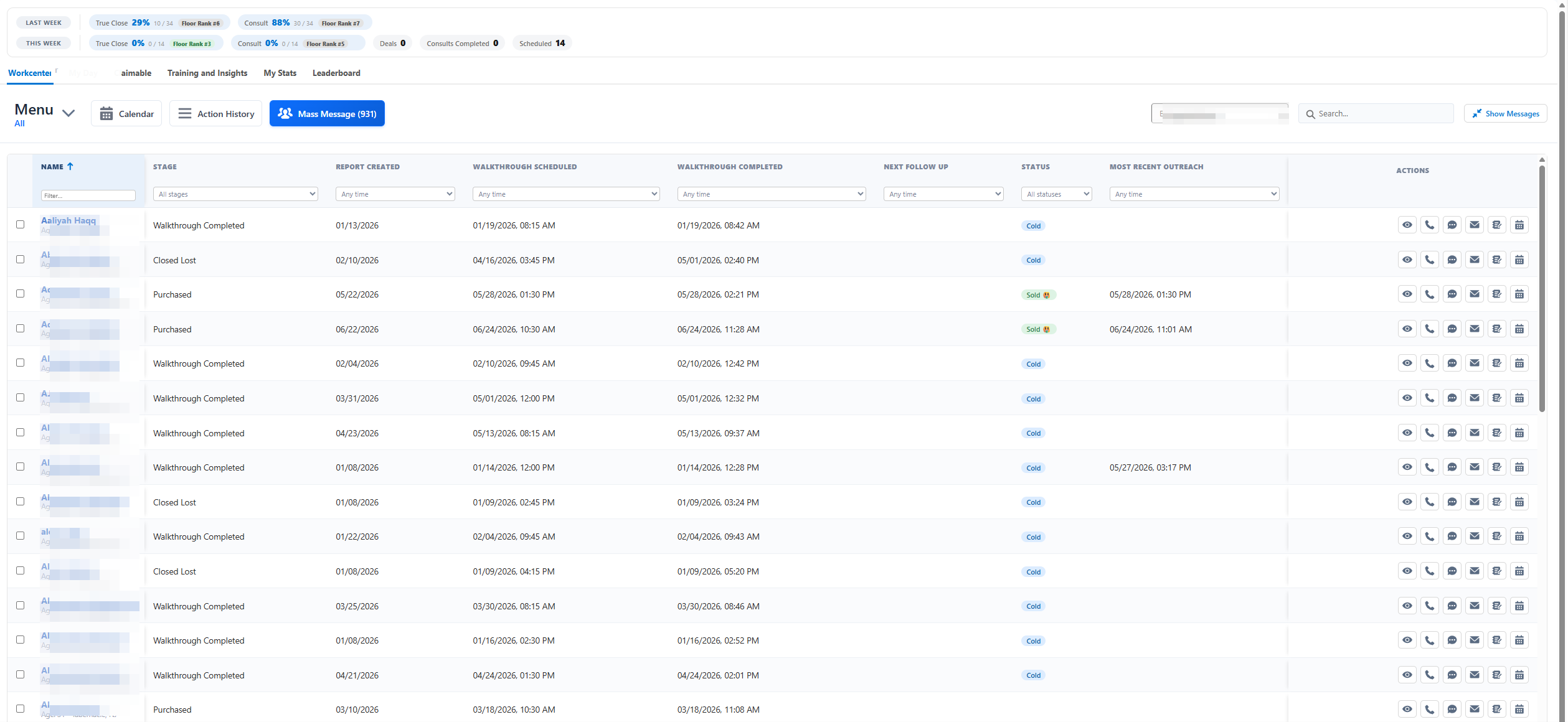
I built a custom Salesforce workcenter for lead management and closing leads, giving reps one operating surface for leads, daily schedules, action history, personal stats, training insights, leaderboards, AI call review, and meeting coverage.
Rep work was fragmented across lead lists, outreach tools, schedules, call history, manager feedback, and performance context. That fragmentation slowed action and made coaching reactive.
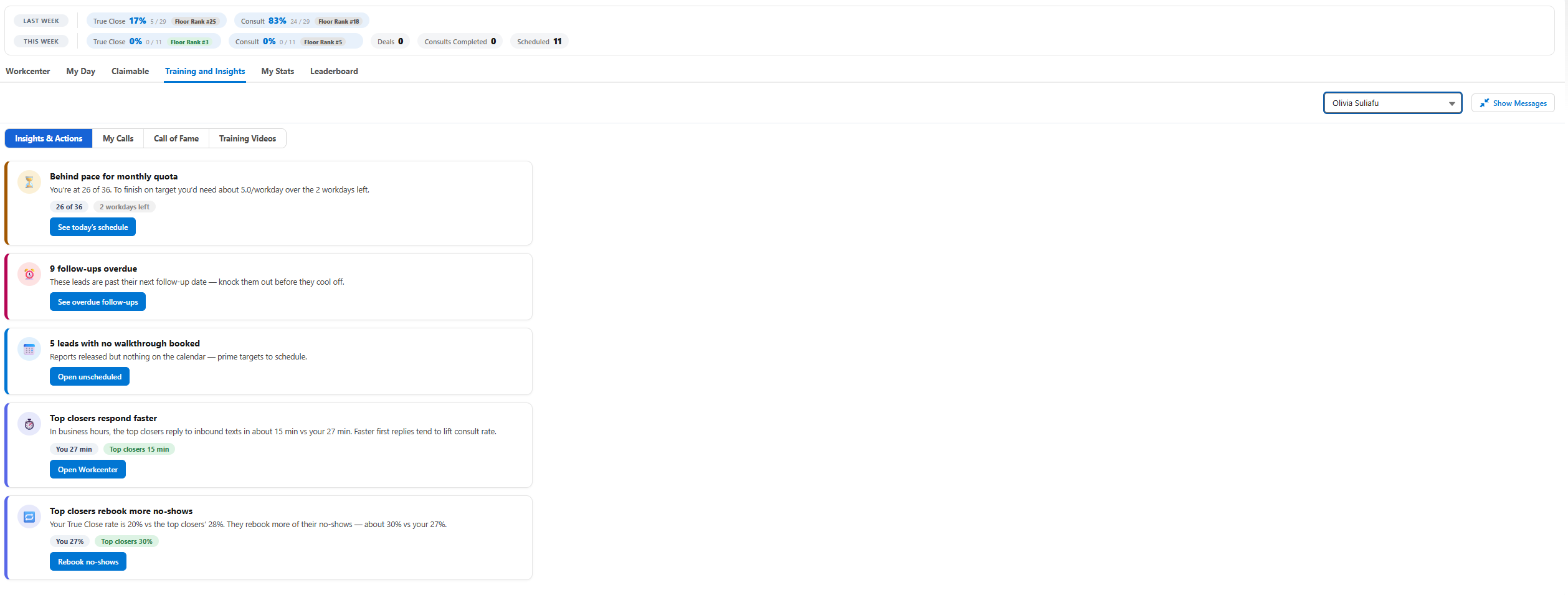
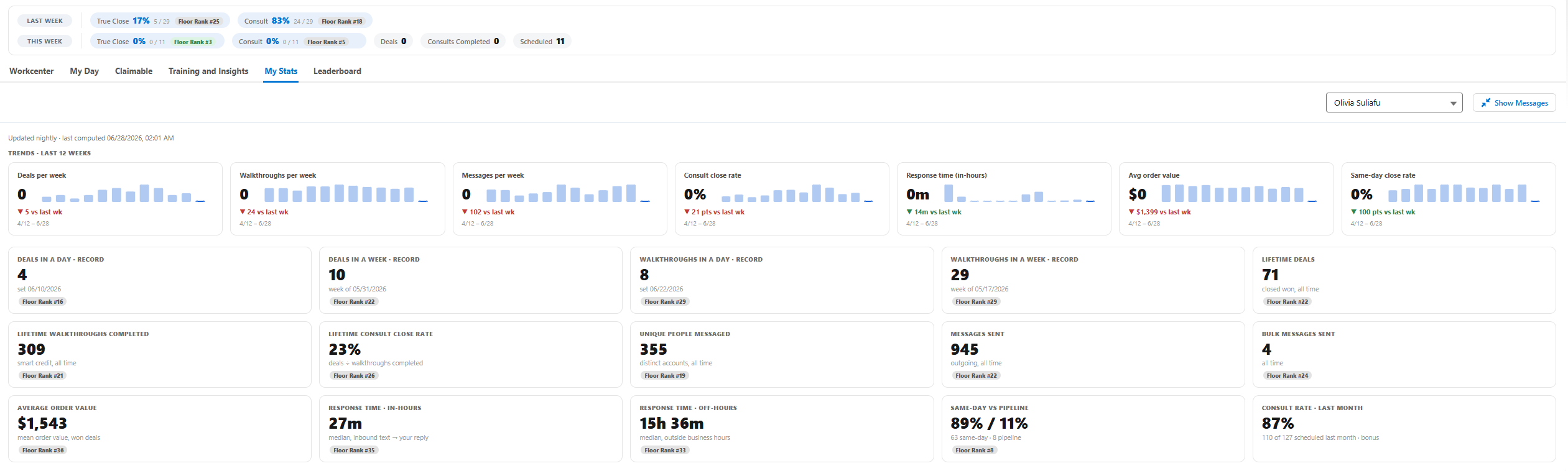
A one-stop workcenter with action history, personal record and stats pages, daily schedule overviews, suggested actions, scheduled event aggregation, training meetings, and live-updating leaderboards.
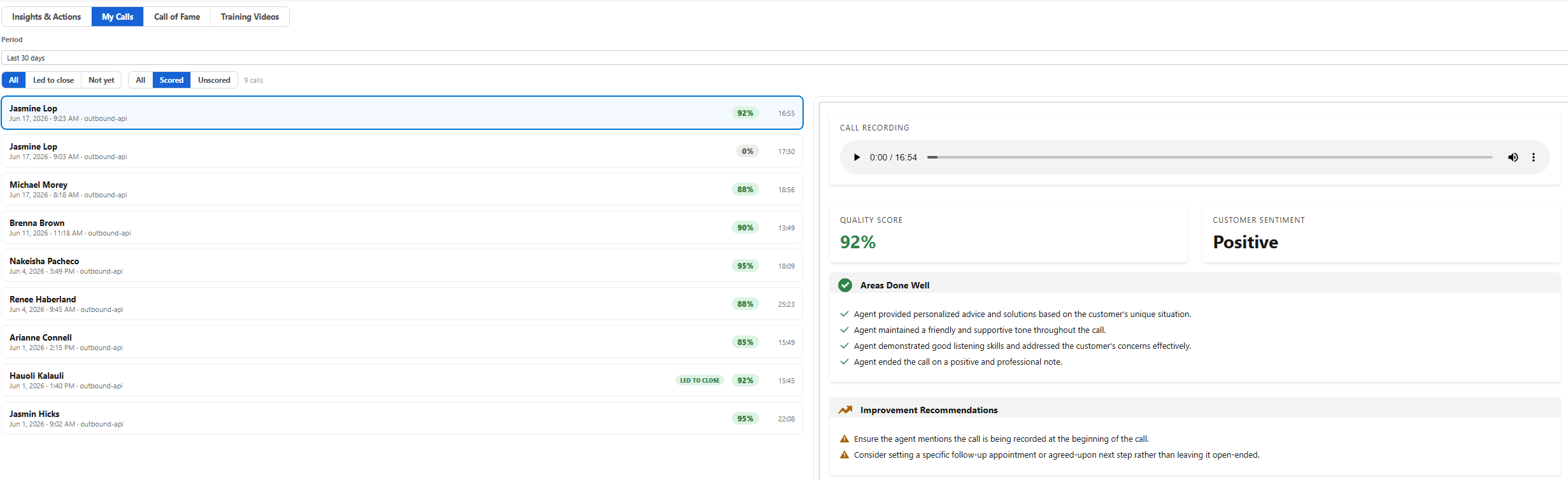
The training system compares reps with floor benchmarks and top performers, identifies behavioral and statistical gaps, and turns call reviews and notes into practical improvement feedback.
I also built smart meeting coverage so reps with calls running long could release calls for other reps to claim, improving efficiency and reducing missed opportunities.
After adoption, overall rep efficiency doubled, missed customer communication was cut in half, and rep performance improved as personalized training became part of the workflow.
This is the clearest example of my RevOps style: build the system, instrument the behavior, feed the signal back to the team, and make performance improvement operational.
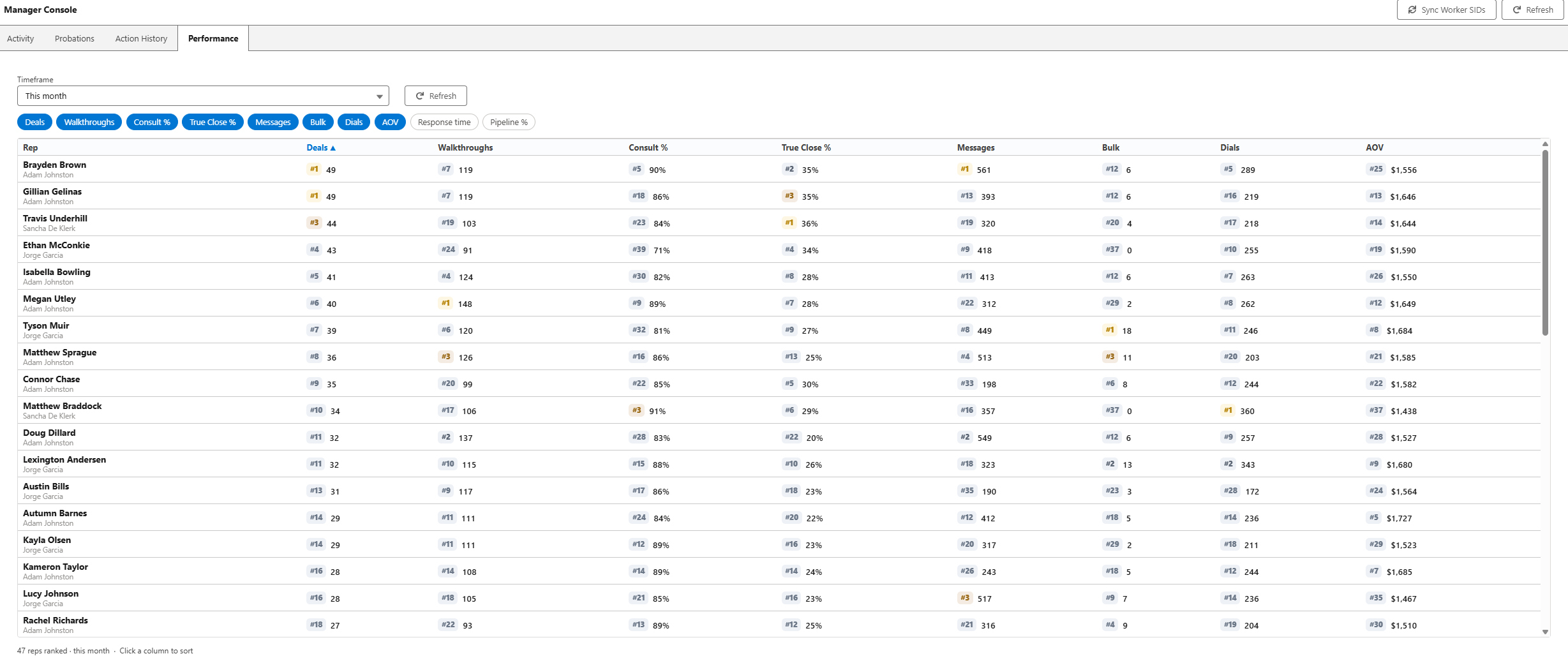
I created a manager-facing console that turns live rep activity, probation controls, historical actions, and KPI rankings into a consolidated view of floor efficiency and team effort.
Managers needed the equivalent of watching the sales floor over a rep's shoulder, including remote visibility for stakeholders who were not physically present.
The live activity tab consolidates rep status, schedules, current and next meetings, Twilio activity, Salesforce actions, and productivity signals into one operating view.
The probation tab makes it easy to limit a rep's opportunities when they are flagged for poor performance by other systems, keeping coaching decisions tied to evidence.
Managers can review everything selected groups or individuals did over a given period, helping distinguish low performance caused by effort from low performance caused by skill gaps.
The leaderboard and stat picker rank reps by selected KPIs, supporting informed decisions on probations, PIPs, and tailored training.
The console makes management more proactive: risk is visible earlier, good performance is easier to spot, and coaching can be pointed at the right behavior.
I built marketing analytics around lead quality, campaign/source/medium performance, UTMs, pricing decisions, ad pacing, predictive close likelihood, and revenue impact.
Marketing reporting needed to move beyond volume. The business needed to know which campaigns and channels produced high-quality leads that actually converted.
I created dashboards and recurring analyses in Sigma and Salesforce to track quality trends, pacing to targets, campaign performance, and revenue-relevant lead outcomes.
The lead probability model gave marketing a quality lens: campaign and event performance could be evaluated by predicted close likelihood, not just form fills or traffic.
For a new event, I set up UTMs and connected inbound traffic and leads to the model. The new event measured 14% more effective than the existing model, supporting a strict 14% revenue lift with universal adoption.
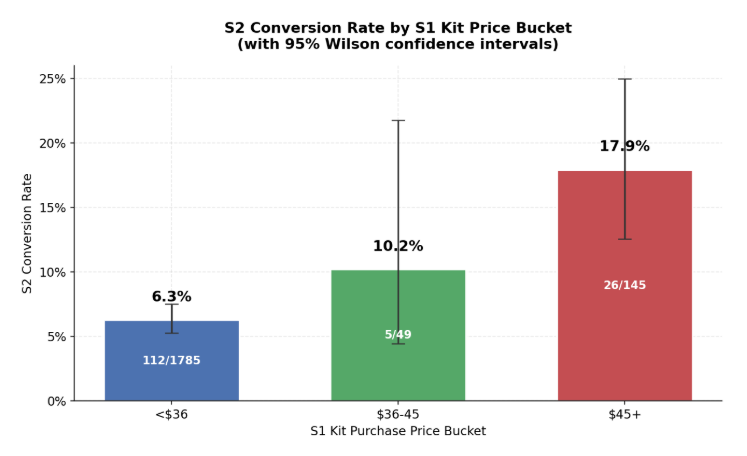
I ran pricing and placement analyses to find tradeoffs that minimize CPA while maximizing lead quality and conversion opportunity.
The work informed campaign priorities, product and sales direction, budget allocation, and the routing logic that turns marketing signal into sales capacity.
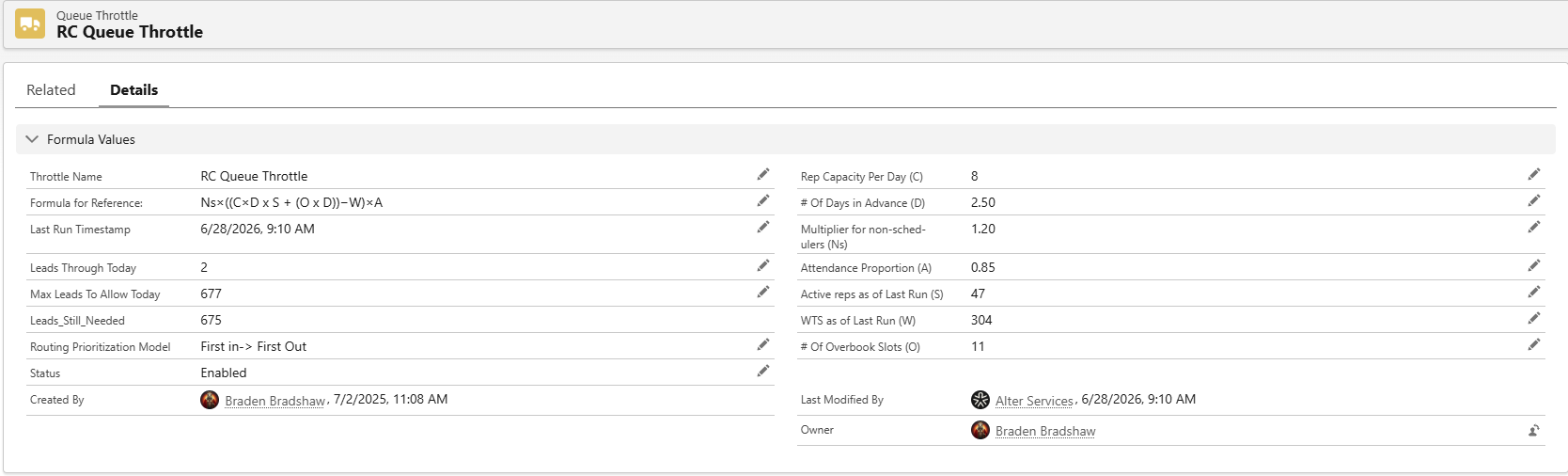
I connected a lead probability model to operational routing and capacity planning so leads could be released and prioritized intelligently instead of flowing blindly into the team.
Lead volume, sales capacity, booking probability, and calendar availability needed to be balanced instead of treated as separate operational problems.
I created a predictive model that estimated a lead's odds of closing within 2%, then used that probability to inform routing decisions.
The throttle released leads based on rep capacity and predicted booking rates, helping the team avoid overwhelming reps while still maximizing opportunity coverage.
Alongside the model, I restructured calendars for performance-based meeting allocation and prioritization, standardized shifts, and enabled overbookings.
The combined system increased daily sale opportunity capacity by 40% and produced a 20% revenue increase through smarter routing.
This project shows the full arc: statistical prediction, CRM logic, capacity planning, and measurable revenue operations impact.
My research background gives my operations work a stronger measurement standard. I have worked across biometric data, wearable devices, loneliness, social connection and diverse scales, language toxicity, network ties, and behavioral analysis, often linking combinations of these to find and explore new outcomes.
I analyzed shock events, network ties, and discourse toxicity on Wikipedia talk pages using page-view validation, talk-page interactions, reciprocal network proxies, and NLP-based toxicity scoring.
The evidence suggested shock events diluted the community with outsiders more than they radicalized insiders, while reciprocal interaction networks were associated with lower toxicity.
Beyond that project, my academic work includes biometric data, wearable devices, loneliness, social connection, diverse scales, behavioral measurement, and how combinations of those signals can reveal new outcomes.
That background shapes how I build business systems: define the behavior, instrument the process, test the signal, and communicate limitations clearly.
That research habit shows up in my business work: I look for the behavioral signal underneath the operational metric, then test whether the measurement is strong enough to guide a real decision.